Buying Guide · Updated 2026
Best Radon Detectors in Canada 2026
Comparing the top radon monitors available in Canada: C-NRPP approval status, accuracy, display types, and which one to buy for your situation.
Jump to a pick
Radon detectors sold in Canada range from $150 to $500 and vary quite a bit in how they measure, display, and report radon levels. The key things to think about before buying:
C-NRPP approval: Health Canada's designated body for radon measurement is C-NRPP. C-NRPP maintains a list of consumer-grade monitors that meet their accuracy standards. Approved devices are your best bet for documented, defensible results, especially for real estate or post-mitigation verification.
Accuracy: Radon monitors measure probabilistically, not precisely. ±10% accuracy on a 7-day average is typical; ±5% on a 2-month average is excellent. Faster hourly readings are less reliable than long-term averages.
Display type: Some monitors show numbers directly on the device; others require an app. App-dependent monitors can be frustrating if your phone is old or connectivity is limited.
Power source: Battery-powered devices can go anywhere; plug-in models need an outlet nearby.
Digital monitor vs. mail-in test kit: Digital monitors stay in your home and give you continuous readings. If you just want a one-time baseline before deciding whether to act, a mail-in alpha track kit ($30–$60) is often the better starting point. We have a pick for that below too.
What the independent Canadian testing shows
Not manufacturer claims. Actual chamber results from Health Canada's designated body.
Most radon detector round-ups quote the accuracy figure printed on the box. Those numbers come from the companies selling the devices. There is a better source, and it is Canadian: the C-NRPP 2024/25 Consumer-grade Electronic Radon Monitor Performance Report, published in May 2025. Six consumer monitors were put through four rounds of testing in the Radiation Safety Institute of Canada's National Radon Chamber.
Two rounds ran at roughly the 200 Bq/m³ Canadian guideline level, because that is the number homeowners actually make mitigation decisions on. The other two pushed the devices higher, to check they hold up across the range:
| Round | Radon level | Temperature | Humidity |
|---|---|---|---|
| 1 (winter conditions) | 218 Bq/m³ | 23 °C | 28% RH |
| 2 (summer conditions) | 210 Bq/m³ | 29 °C | 70% RH |
| 3 (elevated) | 436 Bq/m³ | 23 °C | 36% RH |
| 4 (high) | 1,201 Bq/m³ | 23 °C | 35% RH |
Each round ran for 7 days. Source: C-NRPP 2024/25 technical details.
Each device was scored on measurement error, which combines accuracy and precision, and graded A through E. Grade E is a measurement error above 40%.
The headline result is reassuring. In C-NRPP's words, all of the monitors tested “demonstrated acceptable performance to be recommended by C-NRPP (an average performance grade of B or better)”. Most rounds came back A. If you buy any of the six, you are buying a device that held up in a Canadian chamber.
Humidity is where they separate. Round 2 ran at 70% relative humidity, the sort of summer basement conditions plenty of Canadian homes see, and it was the round where grades slipped. If your basement is damp for part of the year, that round matters more to you than the headline number.
One caveat worth knowing before you buy. C-NRPP is explicit that these consumer devices “cannot be professionally calibrated and are not approved by C-NRPP for use by radon measurement professionals”. A consumer monitor tells you whether you have a problem. It does not produce a professional measurement, so for a real estate transaction or post-mitigation sign-off you will still want a certified professional.
The six devices C-NRPP tested
Manufacturer accuracy claims as recorded in the C-NRPP report. Useful mainly for what it excludes: a monitor not on this list was not in the study.
| Device | Stated accuracy | Reading frequency | Power |
|---|---|---|---|
| Airthings Corentium Home | ±10% after 7 days at 200 Bq/m³, ±5% after 2 months | 12 hr, 24 hr, 7 day | Battery |
| Airthings View | ±10% on the 7 day average, ±5% on the 2 month average | Hourly | Battery or USB-C |
| Aranet RN+ | ±8% on 24 hr, 7 day and 30 day averages | 10 min, 24 hr, 7 day or 30 day | Battery |
| Ecosense EcoQube | ±10% at 370 Bq/m³ after 10 hours | Every 10 min, hourly rolling average | Plug-in |
| Ecosense RadonEye | ±10% at 370 Bq/m³ after 10 hours | Every 10 min, hourly rolling average | Plug-in |
| SunRadon Lüft | ±10% after 7 days at 200 Bq/m³ | Hourly, first reading at 90 min | Plug-in |
The SunRadon Lüft is harder to find from Canadian retailers than the other five, which is why it does not appear in our picks below.
Our picks
We do not make or sell radon detectors. RadonFinder is a directory of certified Canadian radon professionals, so we have no product line to defend. Picks below weigh the C-NRPP results above, price in Canadian dollars, and how the device behaves in a real basement.
Affiliate disclosure. We earn a commission on purchases made through links on this page, at no extra cost to you. We do not sell radon detectors, and commissions do not affect what we recommend or the order picks appear in.
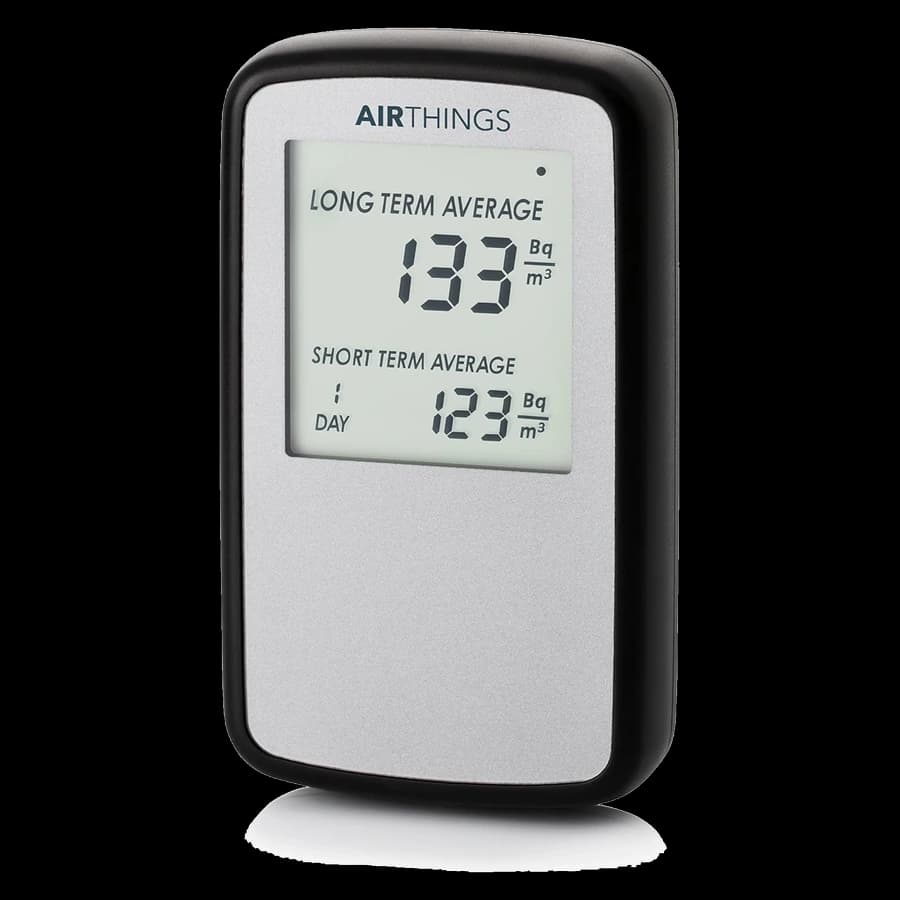
Airthings Corentium Home
C-NRPP Approved~$170–190 CAD
The most popular radon monitor in Canada, and for good reason. Battery-powered with no app required. Shows 12-hour, 24-hour, and 7-day averages directly on the device. Widely available and typically under $190 CAD.
Buy it if Most Canadian homeowners who want a straightforward, proven, standalone device.
Skip it if You want app history, hourly readings, or a humidity reading alongside radon.
- ±10% after 7 days; ±5% after 2 months
- On-device (no app required)
- Battery
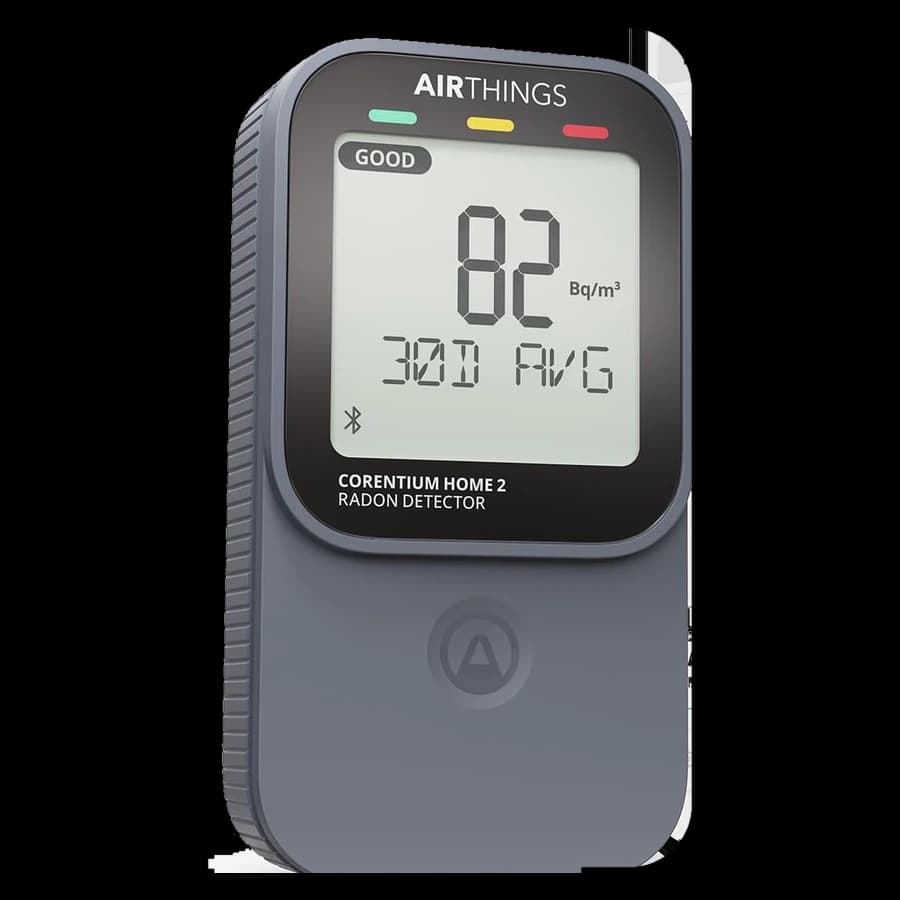
Airthings Corentium Home 2
~$230–250 CAD
The current version of the Corentium Home. Same alpha spectrometry sensor and on-device display, plus Bluetooth, temperature and humidity. Worth the extra money only if you want readings on your phone or care about the humidity reading in a basement. Note that C-NRPP tested the original Corentium Home in its 2024/25 round, not this model.
Buy it if Buyers who want the proven Airthings sensor with app history and basement humidity data.
Skip it if You do not need Bluetooth or humidity. The original is $60 less and is the model C-NRPP tested.
- Manufacturer states the same spec as the original: ±10% after 7 days
- On-device, plus app history over Bluetooth
- Battery
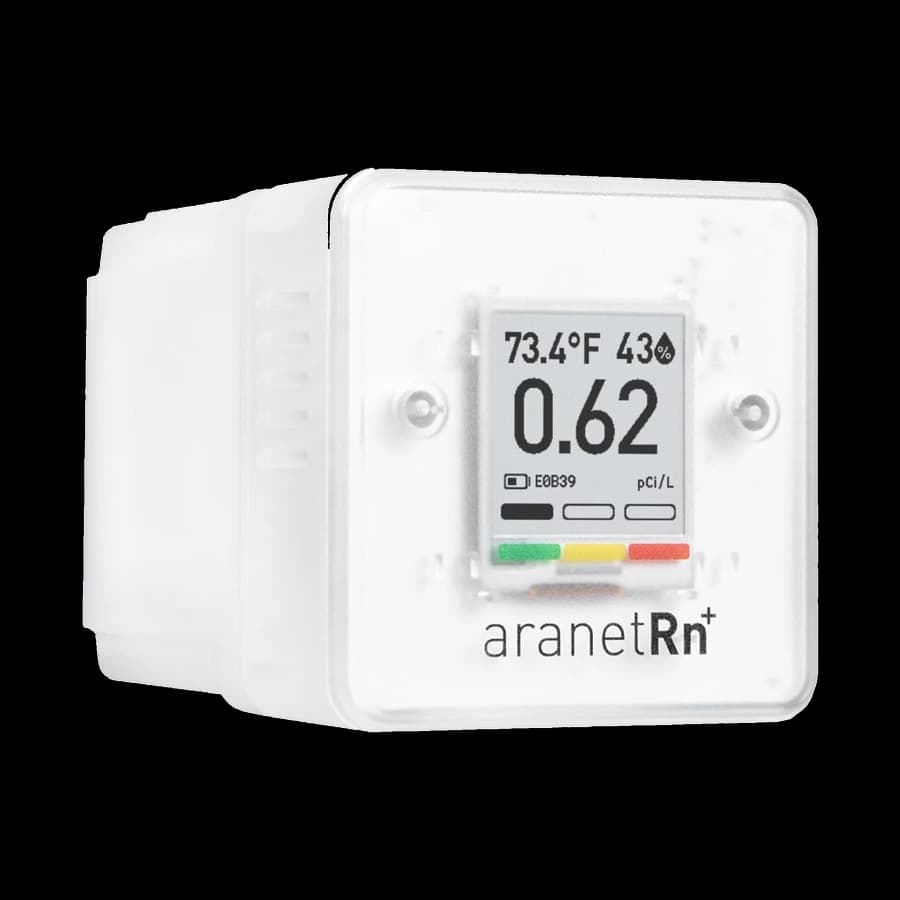
Aranet RN+
~$320–360 CAD
The tightest accuracy spec of any C-NRPP approved consumer device (±8% on 24-hour averages). Clear on-device display, adjustable measurement frequency, no subscription required.
Buy it if Homeowners who want the most precise readings and C-NRPP approval for documentation.
Skip it if This is a first test to find out whether you have a problem at all. The cheaper picks answer that.
- ±8% on 24 hr, 7 day, and 30 day averages
- On-device (user-selectable timeframe)
- Battery
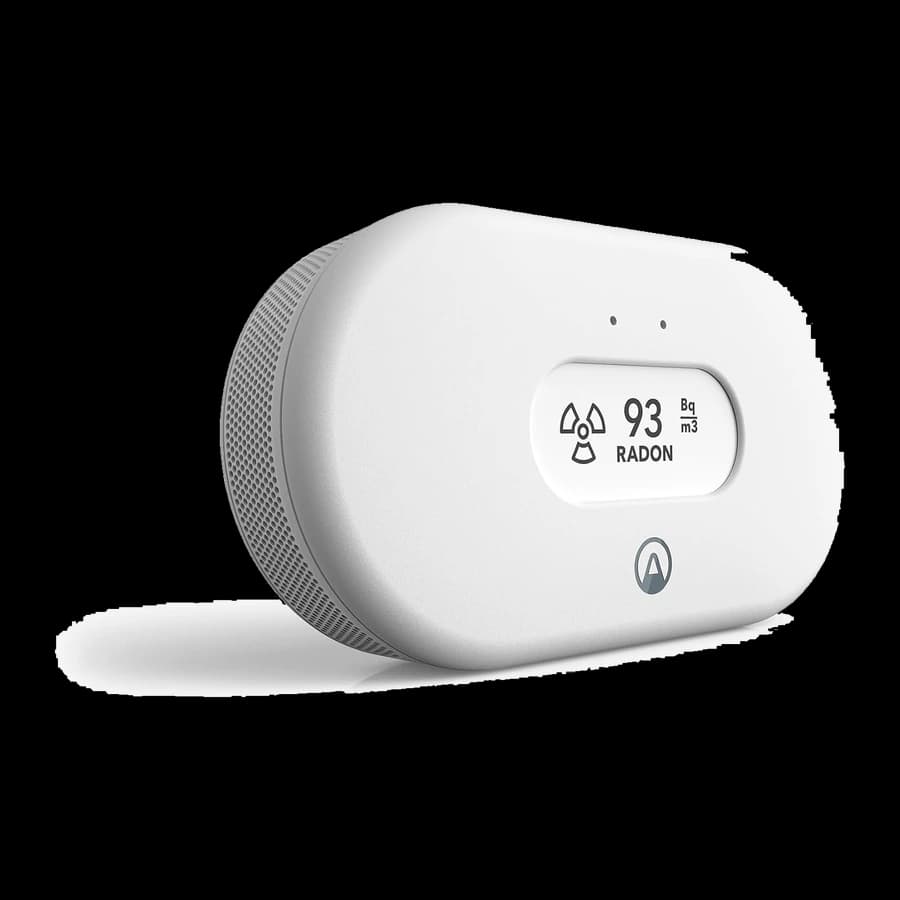
Airthings View Radon
~$220–250 CAD
The most polished connected radon monitor on the market. Hourly readings, full app dashboard with historical trends, battery or USB-C power. Easy to share results or export data.
Buy it if Tech-comfortable users who want a connected dashboard and app-based history.
Skip it if You would rather read a number off the device than manage another app account.
- ±10% on 7-day avg; ±5% on 2-month avg
- On-device + full history in app
- Battery or USB-C
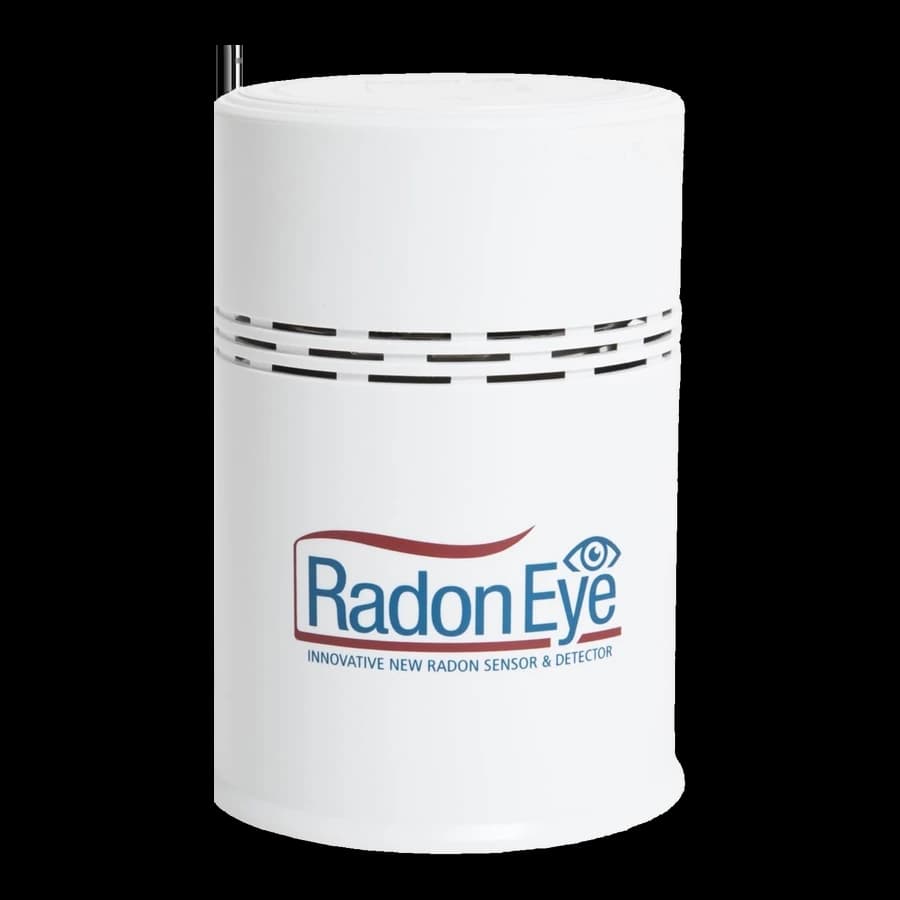
Ecosense RadonEye
~$160–200 CAD
Achieves ±10% accuracy after just 10 hours, much faster than Airthings models that take 24+ hours for their first reading. Sharp OLED display with app history available.
Buy it if Users who want results quickly or are checking a specific space fast.
Skip it if You need to move it between rooms freely. This one is plug-in, not battery.
- ±10% at 370 Bq/m³ after 10 hours
- OLED on-device + app
- Plug-in
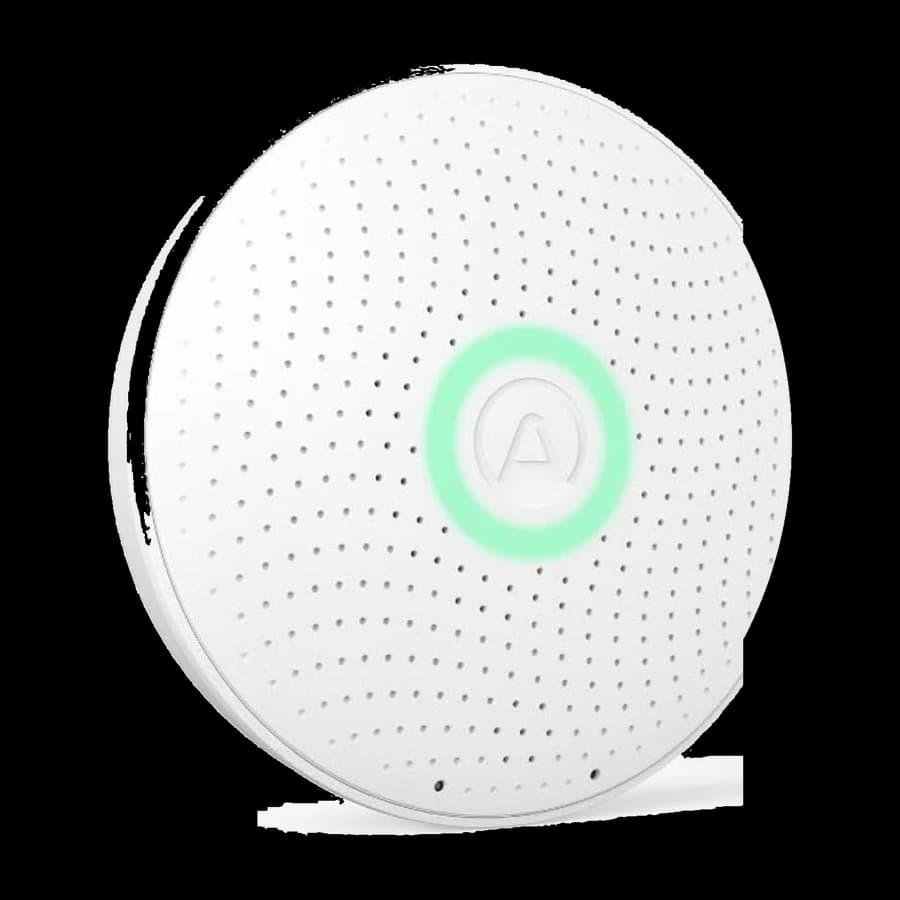
Airthings Wave Plus
~$280–320 CAD
Monitors radon, CO₂, VOCs, humidity, temperature, and air pressure. Radon accuracy matches other Airthings models. The multi-sensor value makes it a strong choice for households interested in indoor air quality broadly.
Buy it if Air-quality-focused households who want radon as part of a bigger picture.
Skip it if Radon is all you care about. You are paying for five sensors you did not come here for.
- ±10% on 7-day avg; ±5% on 2-month avg
- LED ring (motion-activated) + full data in app
- Battery
Not sure you need a monitor yet?
A mail-in test kit is a cheaper first step. Get a baseline reading for $30–$60 before committing to a digital monitor. Health Canada recommends a long-term kit (91+ days) for any mitigation decision.
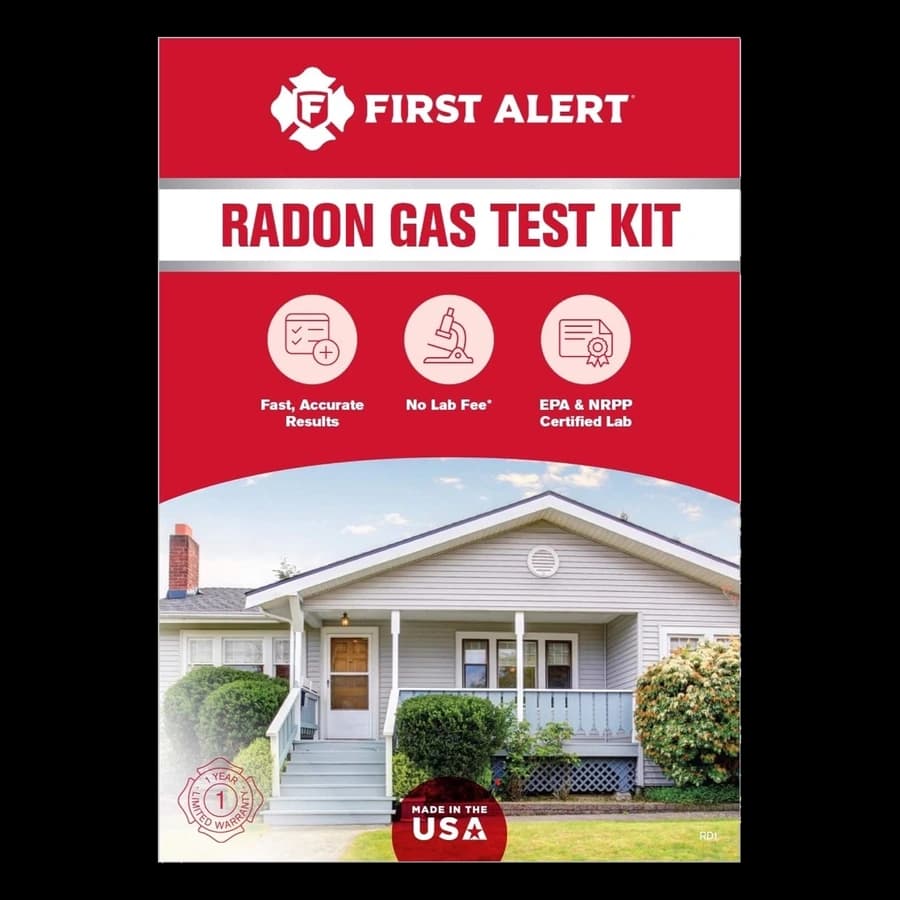
First Alert RD1 Radon Test Kit
~$47.50 CAD (lab fee included)
Best for: Getting a fast baseline reading before a home sale, or before deciding whether to buy a monitor.
- Process
- Place in lowest liveable area for 48–96 hours, then mail to the lab using the included prepaid envelope. Results within 3–5 business days of lab receipt.
- Note
- Lab reports in pCi/L. Multiply by 37 to convert to Bq/m³. Supplement with a long-term kit for mitigation decisions.
Does C-NRPP approval matter?
For most homeowners, it's a nice-to-have rather than a must. The non-approved devices on this list (Airthings Wave series) still provide useful, reasonably accurate data. But if you need certified results for a real estate transaction, post-mitigation documentation, or a landlord paper trail, stick to C-NRPP approved devices: the Airthings Corentium Home, Airthings View, Aranet RN+, Ecosense EcoQube, or Ecosense RadonEye.
How long before you get an accurate reading?
All electronic radon monitors need some settling-in time:
- Ecosense models: about 10 hours for ±10% accuracy
- Aranet RN+: 24 hours for initial readings; 7+ days for stated accuracy
- Airthings models: 24 hours for a first reading; 7+ days for ±10%; 2+ months for ±5%
For the most reliable long-term baseline, keep your monitor in place for at least 3 months and read the long-term average, not the hourly readings.
Full comparison
| # | Monitor | C-NRPP | Best accuracy | Price | |
|---|---|---|---|---|---|
| #1 | Airthings Corentium Home | Yes | ±10% after 7 days; ±5% after 2 months | ~$170–190 CAD | Check price |
| #2 | Airthings Corentium Home 2 | No | Manufacturer states the same spec as the original: ±10% after 7 days | ~$230–250 CAD | Check price |
| #3 | Aranet RN+ | Yes | ±8% on 24 hr, 7 day, and 30 day averages | ~$320–360 CAD | Check price |
| #4 | Airthings View Radon | Yes | ±10% on 7-day avg; ±5% on 2-month avg | ~$220–250 CAD | Check price |
| #5 | Ecosense RadonEye | Yes | ±10% at 370 Bq/m³ after 10 hours | ~$160–200 CAD | Check price |
| #6 | Airthings Wave Plus | No | ±10% on 7-day avg; ±5% on 2-month avg | ~$280–320 CAD | Check price |
| #7 | Ecosense EcoQube | Yes | ±10% after 10 hours | ~$200–230 CAD | Check price |
| #8 | Airthings Wave Radon | No | ±10% on 7-day avg; ±5% on 2-month avg | ~$200–220 CAD | Check price |
Prices are approximate and move around. RadonFinder.ca is an Amazon Associates participant and may earn a commission at no extra cost to you.
Want to compare test kits too?
Our full DIY testing guide covers mail-in kits, digital monitors, and mitigation supplies, with C-NRPP approved picks for Canadian homes.
Common questions
Are cheap radon detectors accurate enough to trust?+
The six consumer monitors C-NRPP tested in 2024/25 all averaged a performance grade of B or better in chamber testing, including models around the $180 mark. Price mostly buys you connectivity, display quality and a tighter accuracy spec, not the difference between a usable reading and a useless one. What matters more than the device is how long you leave it running.
Is a digital radon monitor better than a mail-in test kit?+
They answer different questions. A mail-in alpha track kit costs $30 to $60 and gives you one lab-analysed long-term average, which is the number Health Canada guidance is written around. A digital monitor costs more but stays in the house, so you can see radon rise and fall with the seasons and confirm a mitigation system is working. If you have never tested, a kit is the cheaper starting point.
Does a radon detector need to be C-NRPP approved?+
For your own peace of mind, no. For anything official, it does not help as much as people expect. C-NRPP states that consumer-grade monitors cannot be professionally calibrated and are not approved for use by radon measurement professionals, so even a tested device does not produce a professional measurement. For a real estate deal or post-mitigation sign-off you need a certified professional, whatever monitor you own.
How long do I need to run a radon monitor before the number means anything?+
Ecosense devices reach their stated accuracy in about 10 hours and Airthings models want 24 hours for a first reading, but those are short-term numbers and radon swings a lot day to day. C-NRPP recommends leaving a monitor in place for at least three months, ideally through the heating season when indoor levels are highest, and making mitigation decisions on the long-term average.
Does humidity affect radon detector accuracy?+
It can. C-NRPP ran one of its four test rounds at 70% relative humidity to approximate a Canadian summer basement, and that round is where device grades slipped compared with the drier rounds. If your basement is damp for part of the year it is worth favouring a device that held its grade under those conditions.
What radon level should worry me?+
Health Canada guidance is 200 Bq/m³ as a long-term average. Above that, mitigation is recommended, and the higher the reading the sooner you should act. Below it there is no urgent action, though no level of radon is completely without risk. Judge it on a long-term average, never on a single hourly reading.
Sources
Detector reviews and guides
Ready to test your home?
Find a certified radon professional near you and request a free quote.